
Dentures provide a reliable solution for restoring your smile and improving your ability to eat, speak, and feel confident after tooth loss. Losing teeth can affect more than just your smile. It changes how you eat, speak, and feel about yourself. At California Dental Group Riverside, our team is dedicated to helping patients restore their smiles with comfortable, natural-looking dentures tailored to their unique needs. From your first consultation through your final fitting, you’ll receive personalized care designed to make the process as smooth and stress-free as possible. Whether you’ve already lost teeth or are preparing for extractions, we’re here to help you find a solution that fits your life, your budget, and your long-term oral health goals.
Dentures
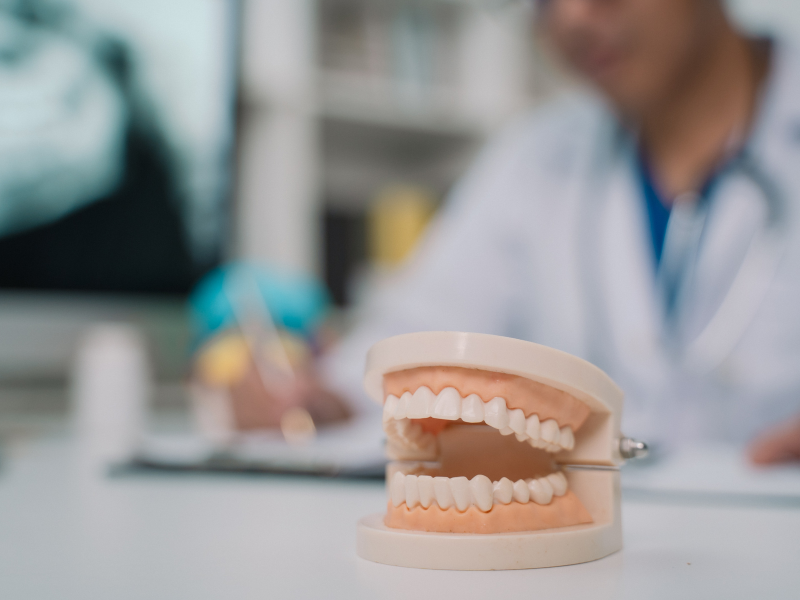
What Makes Overdentures Different From Other Dentures
Traditional dentures rest directly on the gums and rely on suction or adhesive to stay in place. Overdentures, on the other hand, are anchored to either remaining natural teeth or dental implants, providing a more stable foundation that conventional dentures do not offer. This attachment point is what makes overdentures different, changing how they feel, fit, and perform in everyday situations.
Because overdentures are secured to something stable within the mouth, they move less while eating and speaking. They also help preserve jawbone structure, which traditional dentures do not address. For patients who have experienced loose or uncomfortable dentures, or those looking for a more secure solution from the beginning, overdentures can provide improved comfort, function, and long-term oral health benefits.

Benefits of Dentures
Immediate Dentures Mean You're Never Without Teeth
Some patients worry about walking out of an extraction appointment without teeth. Immediate dentures are placed the same day teeth are removed, so there’s no waiting period where you’re left with visible gaps. They also protect the extraction sites during early healing. It’s a practical option for patients who can’t afford, personally or professionally, to go without teeth during recovery.
Overdentures Help Slow Jawbone Loss After Tooth Extraction
When teeth are lost, the jawbone beneath the empty socket begins to shrink because it no longer receives stimulation from chewing. Overdentures anchored to implants transfer chewing forces directly into the bone, mimicking the role natural tooth roots once played. This stimulation slows the rate of bone loss and helps maintain the shape of your jaw over time. It’s one of the few tooth replacement options that actively works against bone resorption.
Custom Shading Matches Your Natural Tooth Color
Denture teeth aren’t one-size-fits-all when it comes to color. They’re shaded and selected to closely match the natural teeth you have or the tone that complements your complexion. This level of customization means the final result looks like it belongs in your mouth, not like an obvious replacement. For patients concerned about aesthetics, the ability to match shade and shape precisely is a significant advantage.
Lower Long-Term Maintenance Costs Compared to Other Restorations
Bridges and crowns may require replacement or repair over time, and those costs add up. Dentures, by contrast, can be relined or adjusted at a fraction of the cost of fabricating an entirely new fixed restoration. When something changes, whether it’s your bite, your gum line, or the fit, the adjustment process is generally straightforward and affordable. This makes dentures a cost-efficient long-term solution for managing tooth loss.
Removability Makes Nighttime Oral Care More Thorough
Removing dentures at night gives your gum tissue a chance to rest and allows for a more complete cleaning of both the appliance and the soft tissues underneath. Bacteria and food particles that accumulate under a denture throughout the day are easier to address when the denture comes out. This nightly reset reduces the risk of gum irritation, fungal infections, and odor. It’s a hygiene advantage that fixed restorations don’t offer in the same way.
What the Denture Treatment Process Looks Like


Why Choose Us for Dentures
Denture treatment isn’t a single appointment. It’s a process that unfolds over several visits, each one building on the last. From the initial evaluation through fabrication, placement, and follow-up adjustments, every stage of care at California Dental Group Riverside is approached with the same level of attention. No part of the process is treated as routine just because it’s not the final fitting. Patients deserve the same thoroughness at a follow-up checkup as they receive on day one, and that standard doesn’t change depending on where you are in treatment.
This consistency matters because denture fit and oral health don’t stay static. Gums change, bone shifts, and what worked perfectly at placement may need adjustment months later. A practice that stays equally engaged throughout the full timeline, not just at key milestones, is better positioned to catch those changes early and respond before they become bigger issues. When you come in for any appointment, whether it’s your first consultation or a routine follow-up, you can expect the same quality of care and clinical focus every time.

Restore Your Smile with Dentures
Understanding dentures involves more than just replacing missing teeth. Everything covered here, from overdenture support structures and bone preservation to fit consistency and the fabrication process, gives you a clearer picture of what denture treatment involves. But reading about it and sitting down with a clinician who can evaluate your specific oral health are two different things.
The next step is a consultation where the general information you’ve just read gets applied directly to your mouth, your bone structure, and your tooth loss history. To schedule that appointment, reach out to California Dental Group Riverside directly by phone at (951) 200-2000. If you want to stay informed between visits, whether it’s care tips, what to expect at each stage of treatment, or updates from the practice, our Facebook and Instagram pages are where that conversation continues.
FAQs
How much do dentures cost?
The cost of dentures varies depending on the type you need, the materials used, and the complexity of your case. Complete dentures typically cost more than partials, and premium materials will affect the overall price. Dental insurance often covers a portion of denture costs, and many offices offer payment plans to help make treatment more manageable. The best way to get an accurate estimate is to schedule a consultation so your specific needs can be evaluated.
How to care for dentures?
Dentures should be cleaned daily using a soft-bristled brush and a non-abrasive denture cleaner rather than regular toothpaste, which can scratch the surface. Rinse them after meals when possible and soak them overnight in water or a denture solution to keep them from drying out. It’s also important to clean your gums and any remaining natural teeth every day to maintain good oral hygiene. Regular dental checkups allow your provider to inspect the fit and condition of your dentures over time.
What are dentures made of?
Most modern dentures consist of two main components: the artificial teeth and the base that simulates gum tissue. The teeth are typically made from acrylic resin or porcelain, each offering different advantages in terms of durability and appearance. The base is usually made from an acrylic resin that can be color-matched to look like natural gum tissue. Some dentures incorporate a metal framework for added strength, particularly in partial denture designs.
What is an overdenture?
An overdenture is a type of removable denture that fits over a small number of remaining natural teeth or dental implants rather than resting directly on the gums. This design provides added stability and can help preserve the underlying bone by keeping some root structure in place. Overdentures are a popular option for patients who want improved retention and function compared to conventional dentures. They can be a good middle ground between traditional removable dentures and a fully fixed implant-supported restoration.
Are overdentures removable?
Yes, overdentures are removable appliances. Unlike fixed implant-supported crowns or bridges, overdentures can be taken out for cleaning and while sleeping. This makes them easier to maintain and allows you to keep both the denture and the supporting teeth or implants clean and healthy. The ability to remove them doesn’t significantly affect their stability during normal daily activities, and most patients find overdentures feel much more secure than conventional removable dentures.
How long do overdentures last?
With proper care, overdentures can last anywhere from five to ten years or more before needing replacement or significant adjustment. The lifespan depends on factors like the materials used, how well you maintain them, and changes in your gum and bone structure over time. The implants or natural teeth supporting them may last considerably longer than the denture itself. Regular checkups are important for monitoring wear and ensuring the fit remains comfortable and functional as your mouth changes with age.