
A cavity doesn’t have to mean the end of a healthy smile. At California Dental Group Riverside, our dental team is committed to restoring your teeth quickly, comfortably, and effectively with dental fillings that blend seamlessly with your natural smile. Whether you’re dealing with tooth decay, a cracked tooth, or an old filling that’s worn down, we provide personalized care designed around your comfort and long-term oral health. We take the time to explain every step of your treatment so you feel informed and confident walking into the chair and walking out with a healthier, pain-free tooth.
Dental Fillings
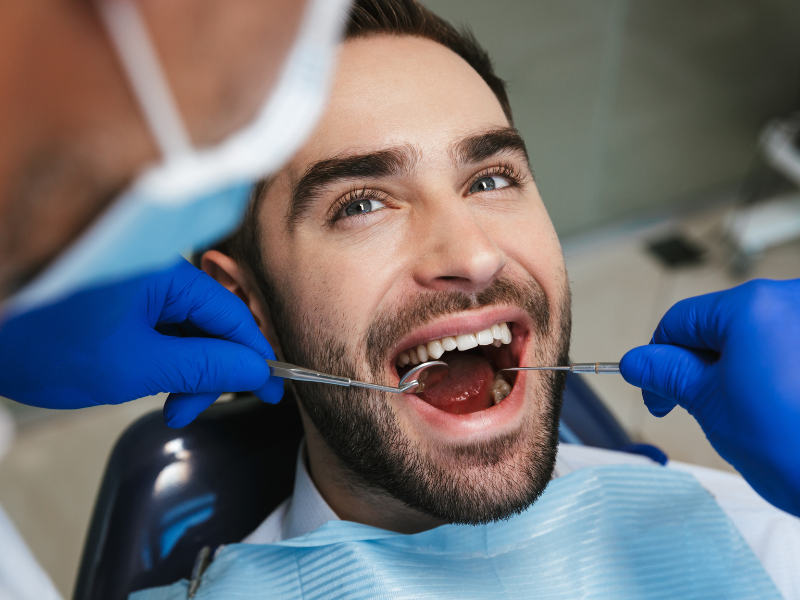
How Decay Develops and How Fillings Stop It
Tooth decay starts small, often too small to feel. Bacteria in your mouth feed on sugars and produce acids that slowly erode your tooth enamel. Over time, that erosion creates a hole, or cavity, that continues to grow deeper if nothing is done about it. Left alone, decay can reach the sensitive inner layers of the tooth, causing pain and putting you at risk for infection.
A dental filling interrupts that process at the source. Your dentist removes the decayed tissue, clears out the bacteria, and fills the space with a durable material that restores the tooth’s structure. The sealed surface gives decay nowhere left to go. The most commonly used materials today are tooth-colored composite resin, porcelain, and amalgam, each suited to different cavity sizes, locations, and patient needs.

Benefits of Dental Fillings
Stops the Cycle of Reinfection
Once decay forms a cavity, that hollow space becomes a trap for bacteria. Food debris collects, acids build up, and the damage compounds. A filling eliminates that pocket entirely by sealing it off with a non-porous material that bacteria can’t penetrate or colonize. Without that cavity to harbor bacteria, the tooth stops being a recurring problem site.
Protects the Tooth Root From Exposure
When decay progresses along the sides of a tooth near the gumline, it can begin exposing the root surface, an area with no enamel protection at all. Fillings placed at or near the gumline shield that vulnerable zone before the root becomes directly involved. Root exposure is far harder to treat and significantly more uncomfortable than a standard cavity.
Reduces the Load on Surrounding Teeth
A tooth weakened by decay doesn’t distribute chewing pressure the way it should, which forces neighboring and opposing teeth to compensate. Over time, that uneven load causes excessive wear on otherwise healthy teeth. Restoring the damaged tooth with a filling brings it back to full structural contribution, spreading bite forces evenly across your entire arch again.
Composite Fillings Actually Bond to Your Tooth
Unlike older amalgam restorations that simply sit inside a prepared cavity, composite resin chemically bonds to the tooth structure itself. That bond adds an extra layer of reinforcement to the remaining tooth wall, reducing the risk of it cracking under pressure. It’s a meaningful structural difference, not just a cosmetic one.
Seals Out Moisture That Accelerates Decay
Dentinal tubules are the microscopic channels inside a tooth that allow fluid movement, which bacteria exploit to drive decay deeper. A properly placed filling seals those tubules at the cavity site, cutting off that pathway. This is part of why filled teeth, when maintained well, don’t continue decaying at the same site under normal circumstances.
How We Treat Cavities at Our Practice


Why Choose Us for Dental Fillings
Getting a filling isn’t just about treating a cavity. It’s about trusting someone to work on a part of your body that affects how you eat, speak, and feel every day. That’s not a small thing. At California Dental Group Riverside, we approach every filling with the same level of care and attention regardless of how routine the procedure may seem, because for you, it’s not routine at all.
We also recognize that patients come in with different levels of dental anxiety, different pain thresholds, and different questions. Some people want a detailed explanation of every step. Others just want it done comfortably and efficiently. We adjust to what you need rather than applying a one-size-fits-all approach to your appointment. What stays consistent is the quality of the work, precise cavity removal, proper material selection, and a finished restoration that fits your bite correctly and holds up with normal use.

Straightforward Treatment, Predictable Results!
Tooth decay rarely announces itself until it’s had time to progress. Dental fillings are one of the most effective ways to stop that progression early, restore your tooth, and avoid more involved treatment down the road. Don’t wait for discomfort to push you into the dental chair. Reach out to California Dental Group Riverside today at (951) 200-2000 to schedule your appointment, and follow us on Facebook and Instagram for oral health tips and updates from our team. Your tooth deserves attention now, not later.
FAQs
How long do dental fillings last?
Dental fillings don’t last forever, but they do hold up well when properly maintained. On average, composite resin fillings last 7 to 10 years, while amalgam fillings can last 10 to 15 years or more. The actual lifespan depends on where the filling is located, how much chewing pressure it endures, and how consistently you brush, floss, and attend routine dental visits. Your dentist will monitor your fillings over time and let you know when a replacement is needed.
How long does numbness last after a dental filling?
Local anesthetic typically wears off within 1 to 3 hours after a filling procedure, though this varies from person to person. Factors like the amount of anesthetic used and the location of the injection can affect how quickly sensation returns. Until the numbness fully fades, avoid eating on that side of your mouth and be cautious with hot foods and drinks. Biting your cheek or tongue accidentally is more common than most people expect during this window.
How much do dental fillings cost?
The cost of a dental filling in the U.S. generally ranges from $100 to $300 or more per tooth, depending on the size of the cavity and the material used. Tooth-colored composite fillings tend to cost more than amalgam due to the technique and materials involved. Dental insurance often covers a portion of the cost, particularly for decay-related treatment. If you’re unsure what to expect out of pocket, contacting your insurance provider or the dental office directly before your appointment is always a good idea.
Can you eat after a dental filling?
You can eat after a dental filling, but timing matters depending on the type of filling placed. Composite resin fillings harden immediately under a curing light, so there’s no extended wait before eating. Amalgam fillings, however, take longer to fully set, and most dentists recommend waiting at least 24 hours before chewing on that side. Regardless of filling type, soft foods are the safest choice right after your appointment while your tooth is still adjusting.
How long does a dental filling take?
Most dental fillings are completed in a single visit and take between 30 minutes to an hour from start to finish. The time varies based on the cavity’s size, location, and the filling material being used. Larger cavities or those in hard-to-reach areas of the mouth may take slightly longer to treat properly. In most cases, the procedure is straightforward enough that patients are back to their normal routine the same day.